Myths, Legends & Sagas
All the civilizations in history, both ancient and recent, had one thing in common: they told stories. Sometimes, the knowledge we can glean from legends, myths and sagas gives us valuable insights about how a civilization once lived, thought, and believed - insights that would have been otherwise lost.
Find out more about the stories of the Ancient Greeks, the Anglo-Saxons and the Norse below:
Beowulf
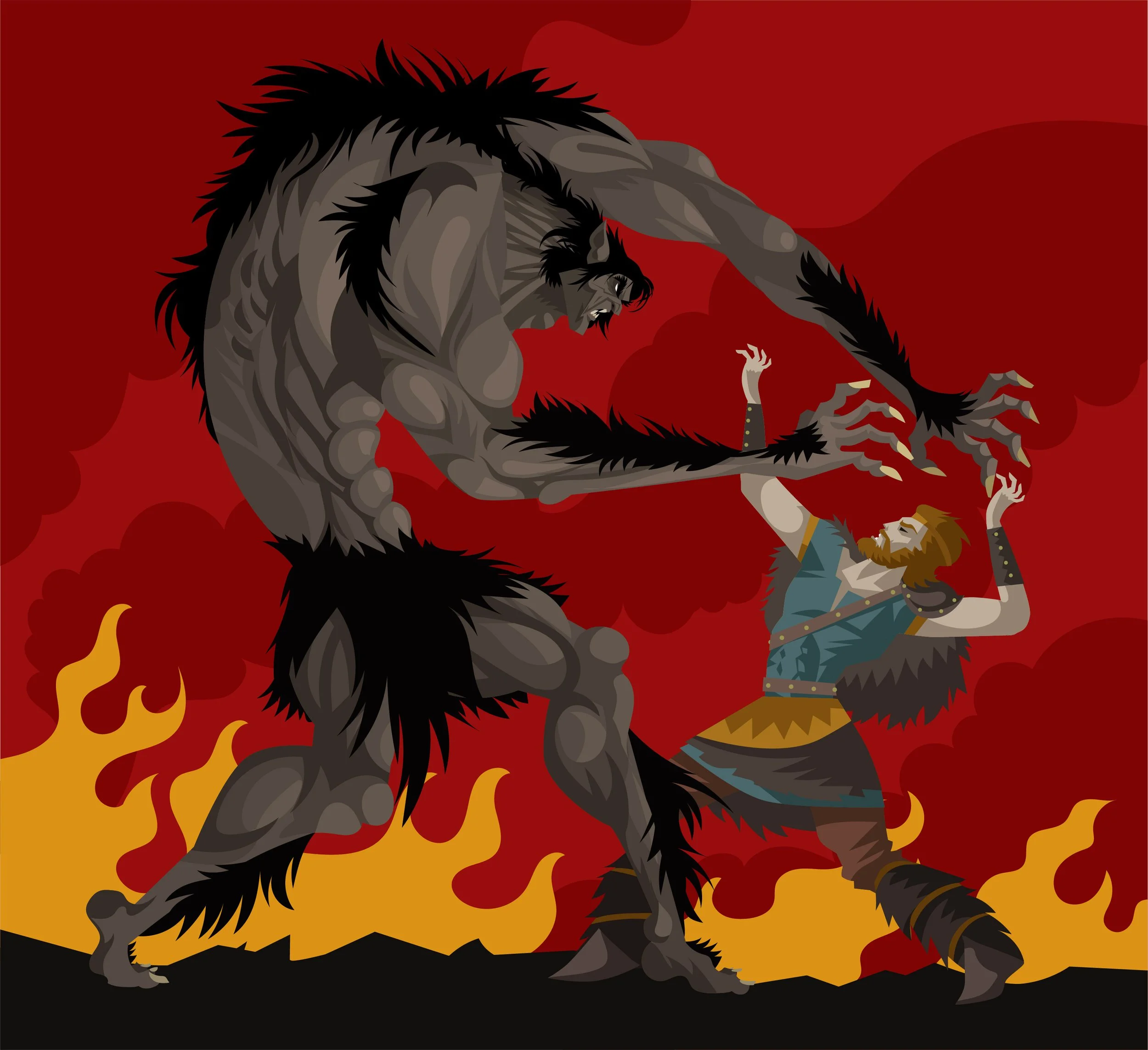
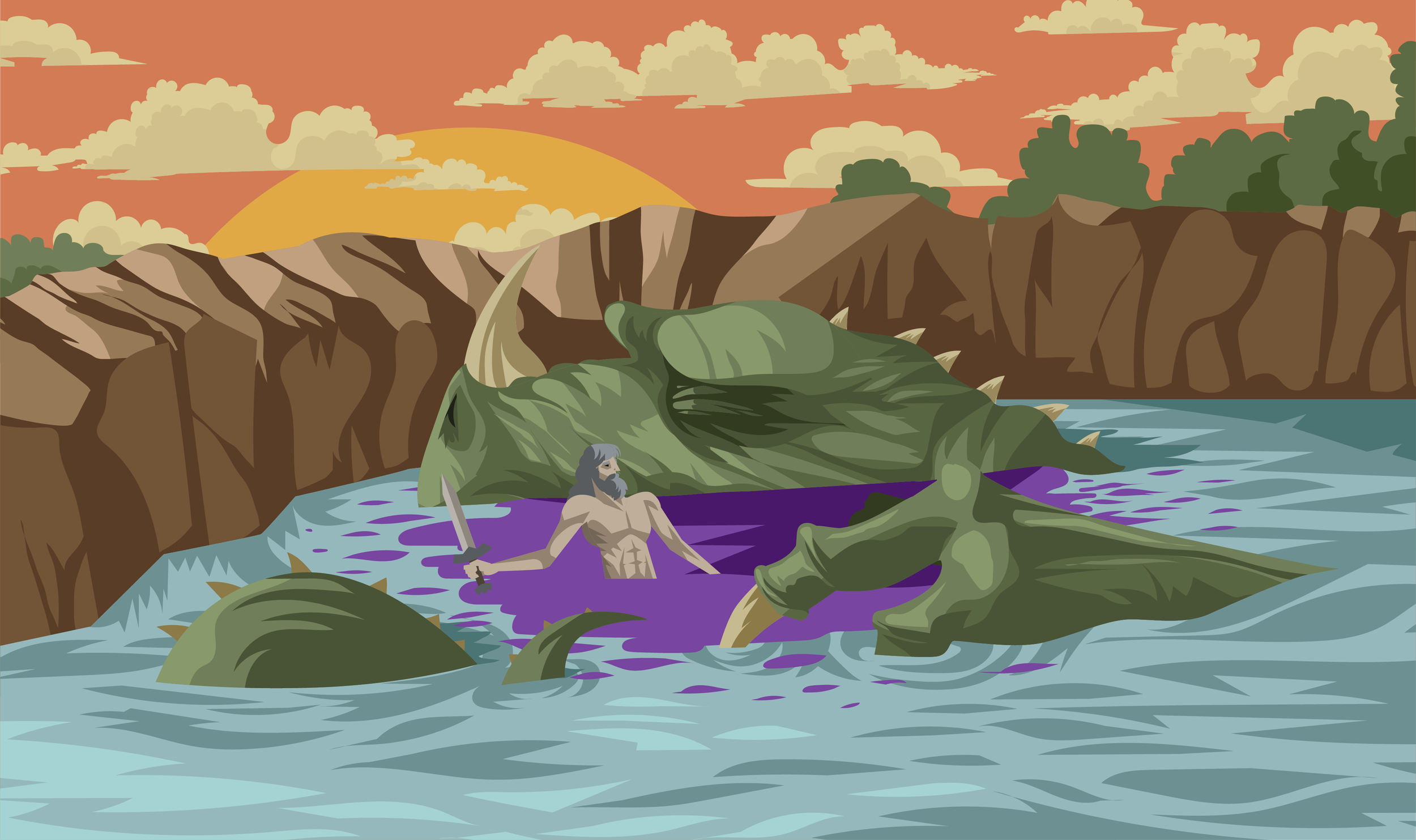
Beowulf is the oldest surviving epic poem written in the English language and one of the greatest stories of heroism ever told. Set in the world of Anglo-Saxon warriors, mead halls, monsters, dragons, and treasure hoards, it explores timeless themes of courage, loyalty, leadership, and legacy.
Odysseus was warned about sirens and ordered his crew to plug their ears with wax. But Odysseus was curious about their legendary voices, so he had himself tied to the bow of his ship and instructed his men not to release him, no matter how much he begged.
He told his men that even if he begged to be released, they should only tie him tighter. Sure enough, when he heard the song of sirens, Odysseus begged to be released, but his crew refused to release him until they were out of danger.
After Odysseus escaped unharmed, the sirens, devastated by their failure, threw themselves into the sea, marking the end of their terror.
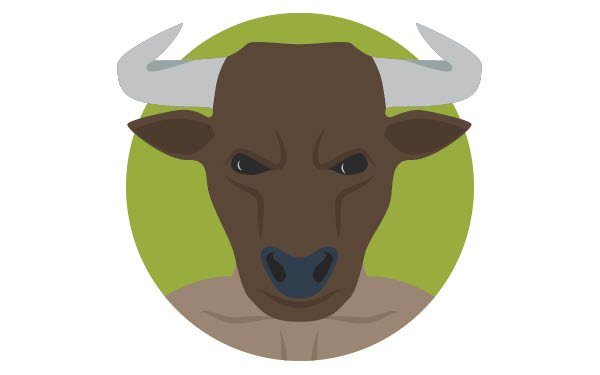
The Minotaur was the son of Minos, the king of Crete, but he had a bad habit of eating people, so he was kept captive in a labyrinth under the city. Seven maidens and seven young men were chosen from Athens every year to feed the beast. One year, the son of the Athenian king, a young man named Theseus, volunteered as tribute. He boasted that he would kill the Minotaur. With the help of Ariadne, the Minotaur's sister, Theseus smuggled a sword into the labyrinth. He unraveled a ball of string as he made his way through the maze until he found the Minotaur. The Minotaur was sleeping, so Theseus slew him easily. He found his way back out of the labyrinth using the trail of string he left behind.
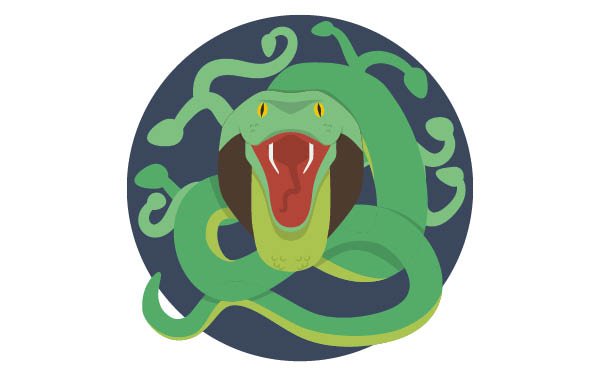
Heracles was tasked with killing the hydra. For this feat, he brought along his nephew, Iolaus. Cleverly, they covered their noses mouths to protect themselves from the deadly fumes of the beast. Heracles cut off one of the monster's heads, but then two head grew back and took its place. He cut off two more heads, and four more grew back. Iolaus figured out he could use a burning torch to seal the neck stumps when Heracles cut off one of the heads so they couldn’t grow back. Heracles put an end to the hydra when he cut off its main head and buried it under a large rock.
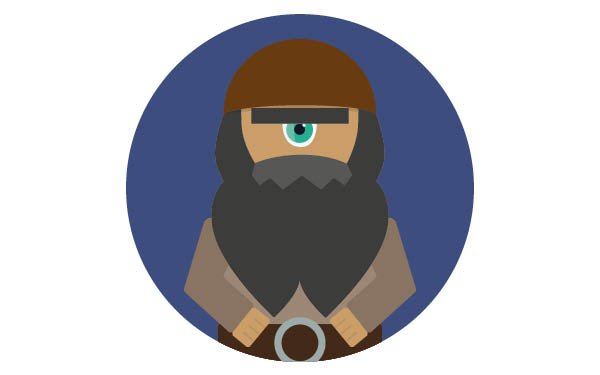
After a long sea voyage, Odysseus and his men were happy to find an island. There was even a cave full of sheep. They had a wonderful dinner. The only problem was that the cave belonged to a cyclops. The Cyclops decided to eat the men in exchange for the sheep they took. He ate two men right then and there, then rolled a stone across the entrance so the sailors couldn’t leave. Odysseus knew he needed to come up with a plan. He watched the cyclops roll the stone open every day to let the sheep out and he told the others his idea. That night Odysseus gave the cyclops some wine and when the cyclops fell asleep the sailors stabbed him in the eye with a spear. Now the cyclops was blind. The next day, when the blind cyclops rolled the stone from the door so the sheep could go outside Odysseus and his men were each tied to a sheep and made their escape.
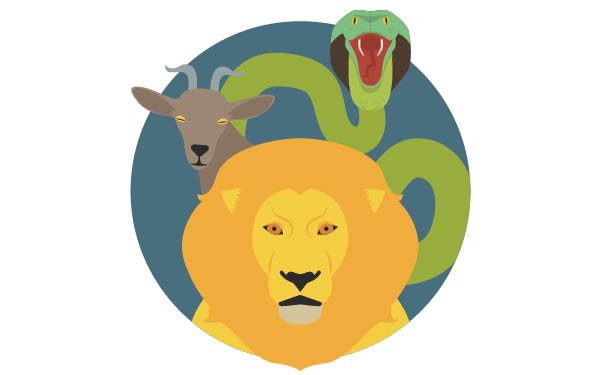
The Chimera was a fire-breathing monster that terrorized the countryside of Lycia. A king commanded a man named Bellerophon to kill the beast. Bellerophon couldn't complete the task on his own, but the goddess Athena helped him tame Pegasus, the winged horse, with a golden bridle. Bellerophon and Pegasus chased the beast, but the Chimera's fire was too fierce for them to face. Bellerophon realized he could use the heat of the fire to his advantage. He put a piece of lead on the end of his spear, and when the Chimera opened its mouth, he stabbed it. The lead melted and the Chimera suffocated, ending its reign of terror.
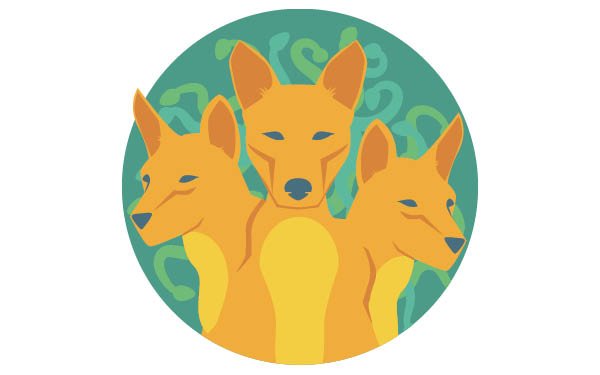
For the last of Heracles ' twelve labors, Heracles was given the task of retrieving Cerberus. Hades agreed that Heracles could take Cerberus from the underworld, but he could use no weapons. Heracles grabbed Cerberus and was bitten by the hound's snake tail, but he didn't let go. In the end, he managed to overcome the hound.
Heracles brought Cerberus to the mortal world but he did not kill him and Cerberus returned to the Underworld.